

Most recently added content
Submitted by Nigel Jones on ,

Identifying bees, wasps and ants? Try these first...

Most bees, wasps and ants (aculeate Hymenoptera, or "aculeates" for short) require considerable skill and experience to identify them. There are however a small number of bees and wasps that, with care, can be identified quite easily. On these pages you will find photos and pointers for the identification of some of the commoner distinctive species.


Online recording pages for the spring species have now been developed and will be active in early March, to coincide with the flight periods. Just click on… Read more
Submitted by Nigel Jones on ,

Key to Stenamma worker ants

Submitted by Nigel Jones on ,

A visual guide for the identification of British Coelioxys

Submitted by Nigel Jones on ,

Bees
 

Handbook of the Bees of the British Isles (2-Volume Set). George Else and Mike Edwards (2018). A comprehensive key and accounts for the British species of bees. 775 pages in two volumes. Corrections available here - updated 31 December 2022

Field Guide to the Bees of Great Britain and Ireland. Steven J. Falk (2015). Keys and describes all the British species known by 2015.

… Read more

Submitted by Nigel Jones on ,

British Potter & Mason Wasps: Key - M. Archer

Submitted by Stuart Roberts on ,

Francis Morice was born on June 23rd 1849 in St. John’s Wood. His father, D.S. Morice, came from Canterbury (though he was of Scottish extraction), whereas his mother hailed from Dorset. His early education was received at a number of private schools, including Uppingham, which he joined when he was eleven. Four years later (1864) he went to Winchester and, at seventeen (1866), he entered New College, Oxford. There he read Classics, gaining a second class in Classical Moderations and a first in Lit. Hum. He also won the Chancellor’s Latin Essay Prize and became the first… Read more

Submitted by Nigel Jones on ,
Submitted by Stuart Roberts on ,

Edward Saunders (1848-1910)

Edward Saunders was born at East Hill, Wandsworth on March 22 1848. His father was W.W. Saunders, who for a time, held a commission in the British Army (Royal Engineers). Young Edward was educated entirely at home and began an interest in natural history at an early age, beginning with the Coleoptera, though he also studied both botany and conchology. In 1864, when sixteen years old, he published his first paper, “Coleoptera at Lowestoft” in the Entomologist’s Monthly Magazine. Later, he began a very detailed study of the world Buprestidae, culminating… Read more

Submitted by Stuart Roberts on ,
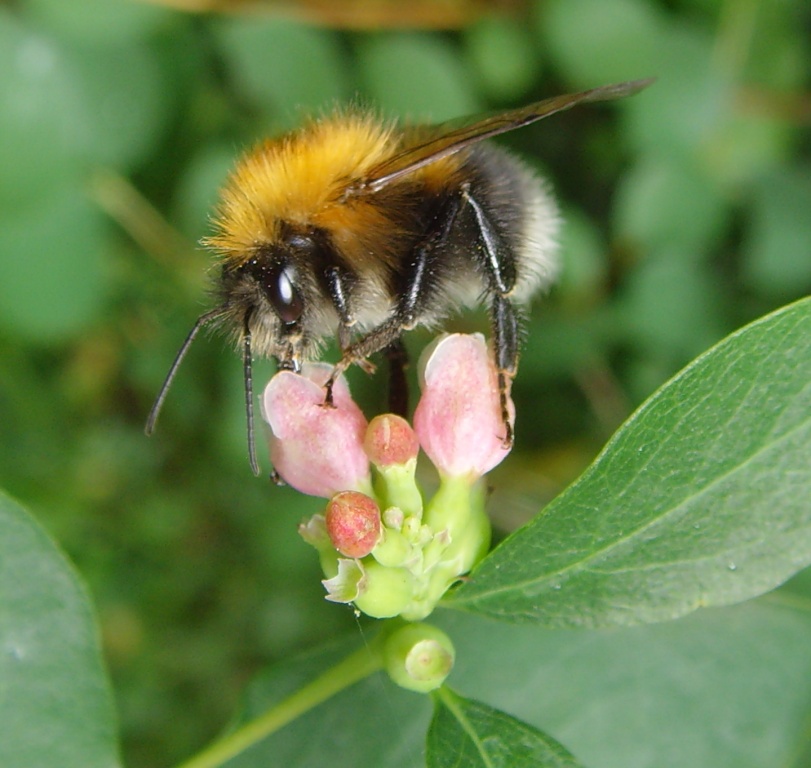
Bombus hypnorum map: 10 February 2018


Photo: Male at flowers of Snowberry; Somerset

By kind permission of Richard Mielcarek. 


The map shows all the records received in 2017.  We have received major support in this work from the Bumblebee Conservation Trust, and many records have also come in via iSpot, Facebook and iRecord.

Back to Survey… Read more

Submitted by Nigel Jones on ,

Yearly membership within the UK is £20.

For members outside the United Kingdom, the EU membership rate is 30 euros.

All memberships become renewable on the 1st of January each year and run from 1st Jan to 31st Dec.

New members joining from 1st October will have their membership extended to cover the following year in full.

Payment is accepted by card.

Join here: https://membermojo.co.uk/bwars/


Membership Benefits


BWARS Newsletter

Published twice yearly in Spring… Read more