

Online Anthidium manicatum survey launched
BWARS has launched an online survey for Anthidium manicatum ("wool carder bee") here
- Read more about Online Anthidium manicatum survey launched
- Log in to post comments
BWARS has launched an online survey for Anthidium manicatum ("wool carder bee") here
Use this format:
For example for the page: https://www.bwars.com/index.php?q=bee/apidae/anthophora-plumipes
The citation should be:
Bees, Wasps & Ants Recording Society, 2013. Anthophora plumipes. https://www.bwars.com/index.php?q=bee/apidae/anthophora-plumipes. [Accessed Date (style 1st January 2013)]
Which would look like this:

BWARS is launching a project to map and record behaviour of common and easily recognised species.
These are currently:
Andrena cineraria (Ashy Mining-bee)
Andrena fulva (Tawny Mining-bee)

Stuart Roberts has provided a review for this new and comprehensive account of the Netherlands bee fauna.
Stuart Roberts has provided a review for IBRA's new book Plants for Bees
Stuart Roberts has updated the 2012 map for Colletes hederae
Steven Falk has created an extensive Bombus section on his Flickr pages. This includes numerous images of 23 of the British species together with information about each species. Users will find the species accounts particularly useful for helpful hints on identifying Bombus species in the field.
Steven's pages are HERE

BWARS is running an identification workshop for those wanting to improve their ability to identify solitary wasps with one submarginal cell.
Crossocerus quadrimaculatus
Photo: Tristan Bantock
IBRA - The International Bee Research Association has recently published Plants for Bees. Illustrated in full colour throughout, the book provides gardeners, beekeepers and bee lovers with all the information they need to create a healthy environment for the many species of bee in the British Isles.
Plants for Bees very adequately recognises the importance of all our native bee species. Many solitary as well as social species are depicted in excellent quality photographs, most of which have been contributed by BWARS members.

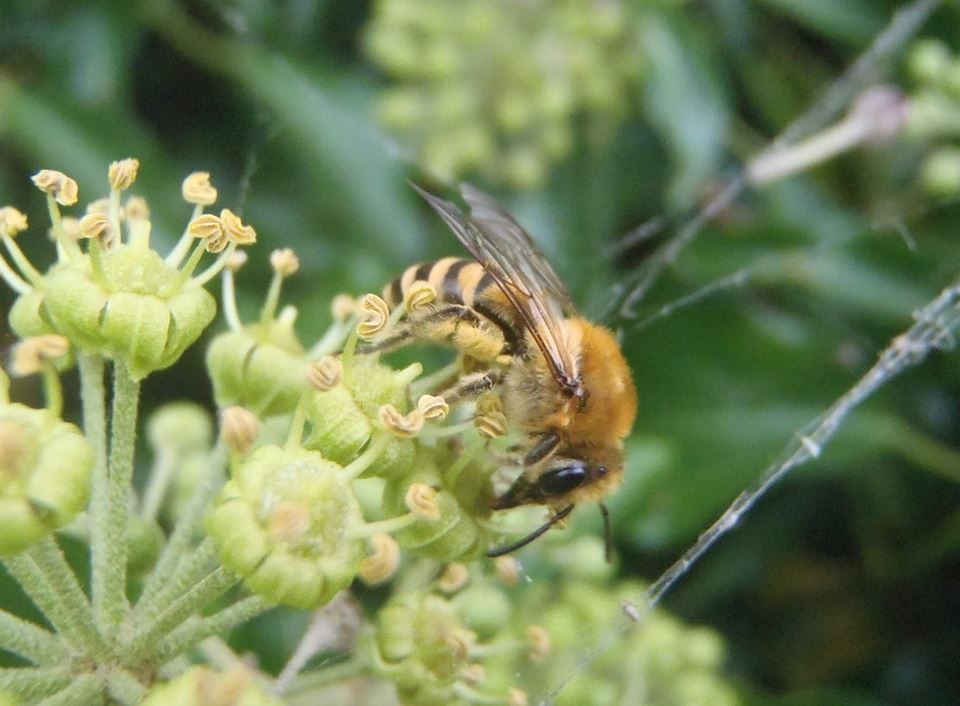
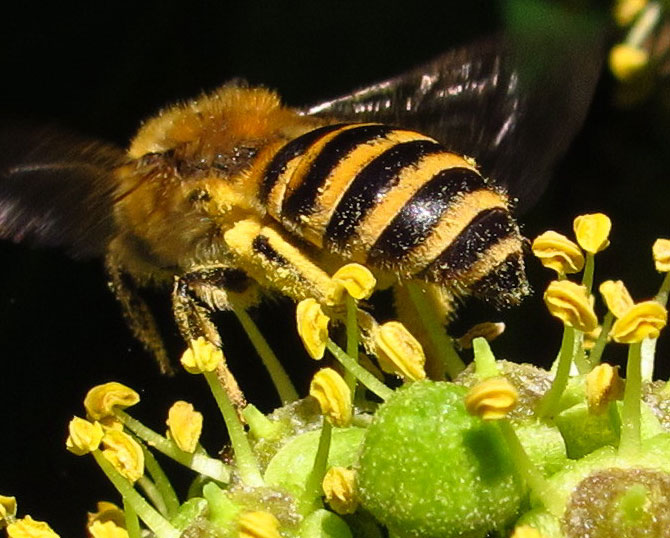
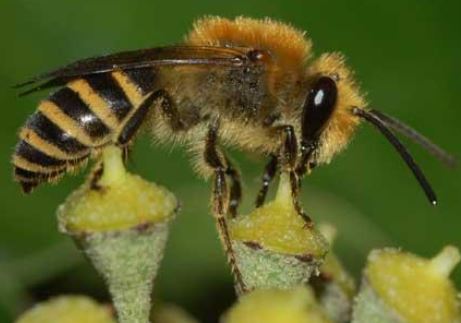
The Colletes hederae "ivy bee" season is upon us. C. hederae has been spreading north across the country since 2001 and BWARS is keen to continue recieving records of sightings.