


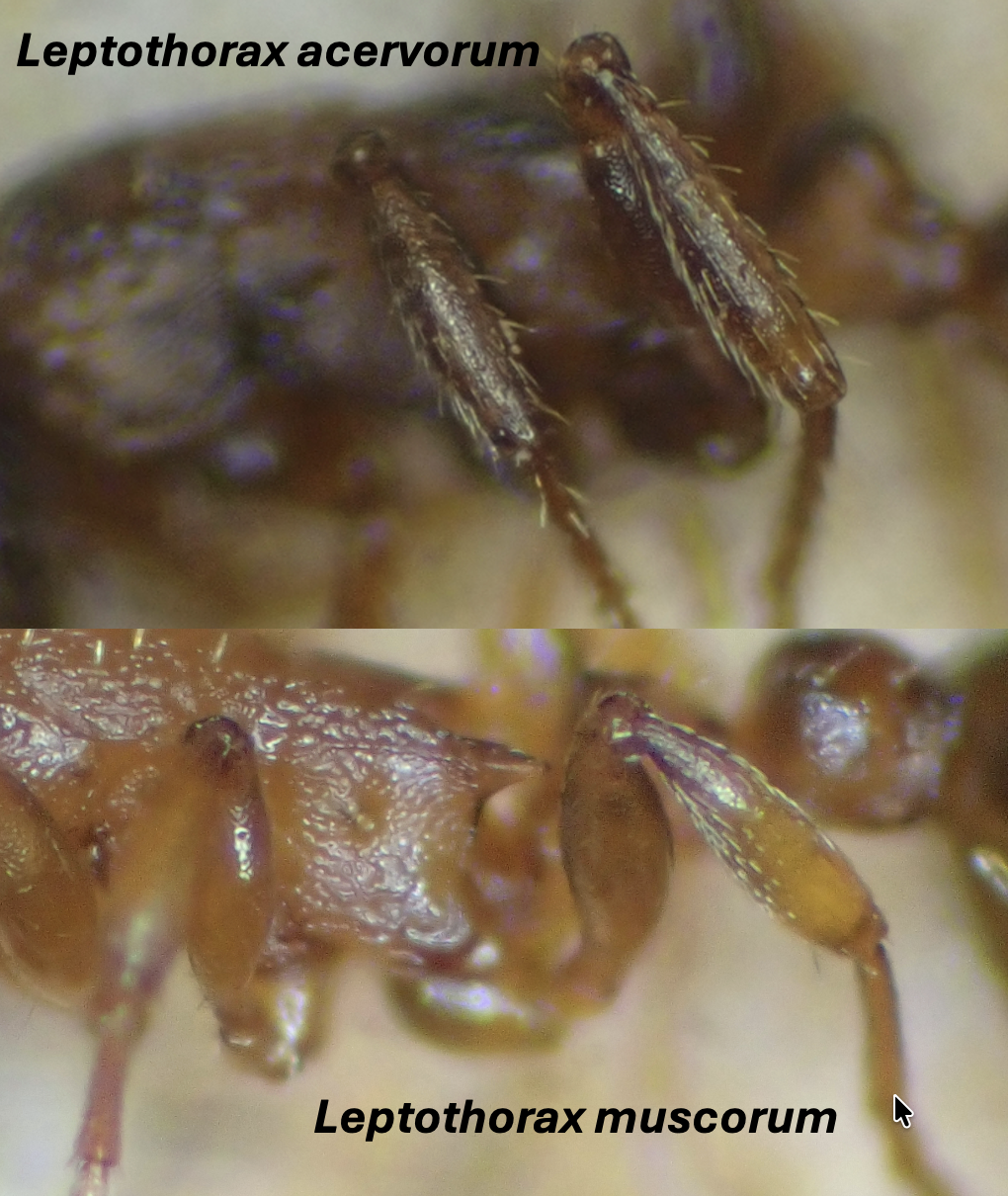
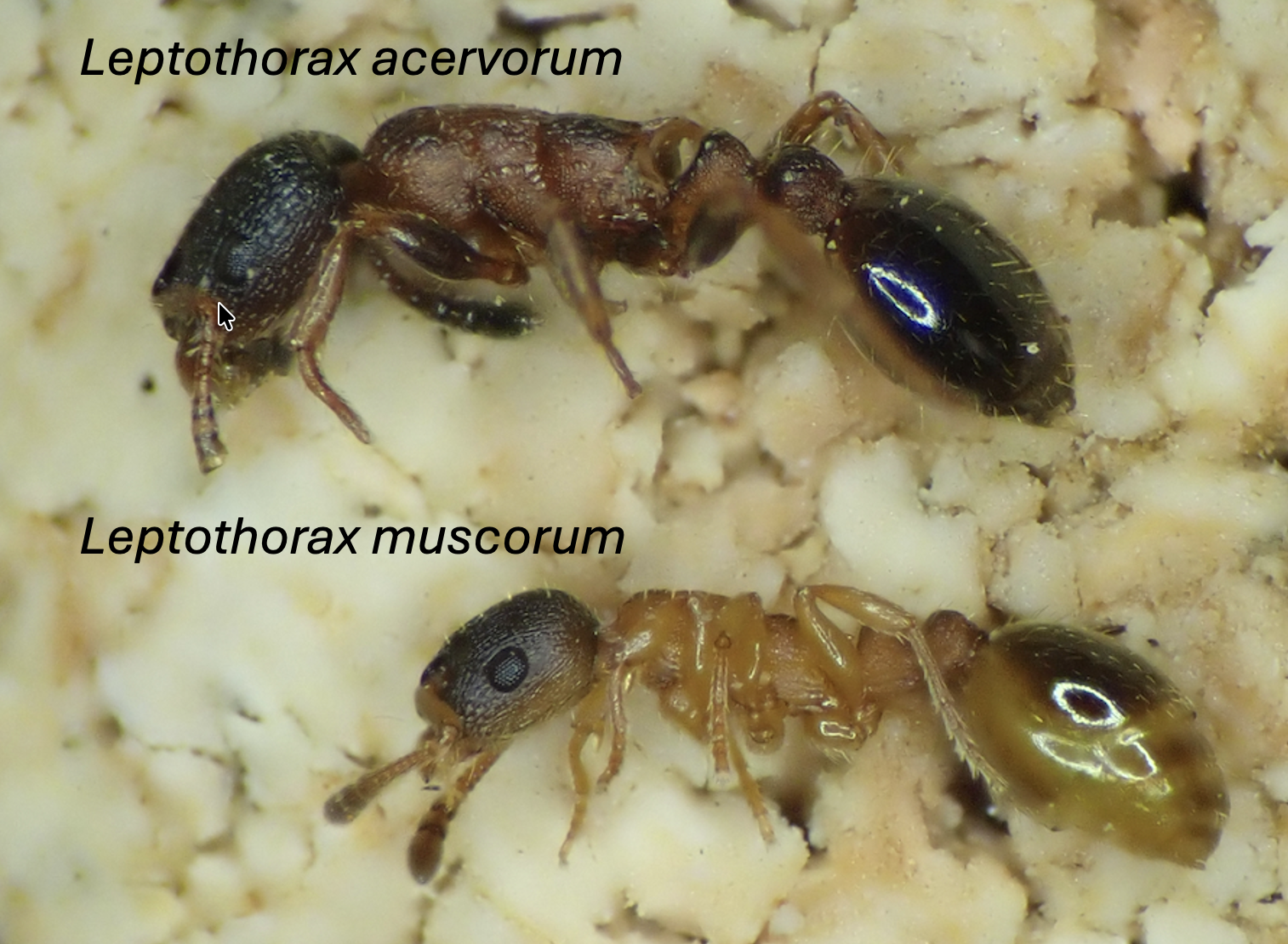
A small myrmicine ant, forming small, unobtrusive colonies with less than 100 workers and one or occasionally two queens. Leptothorax muscorum closely resembles the widespread L. acervorum (q.v.) in having 11 antennal segments, but is slightly smaller, slenderer, and paler with yellowish-brown midbody contrasting with darker gaster and head. The colour differences are variable, but with a lens L. muscorum and L. acervorum are readily distinguishable by the absence or presence respectively of stiff erect hairs on their tibiae. It could be mistaken for a Temnothorax species, but these have 12 antennal segments.
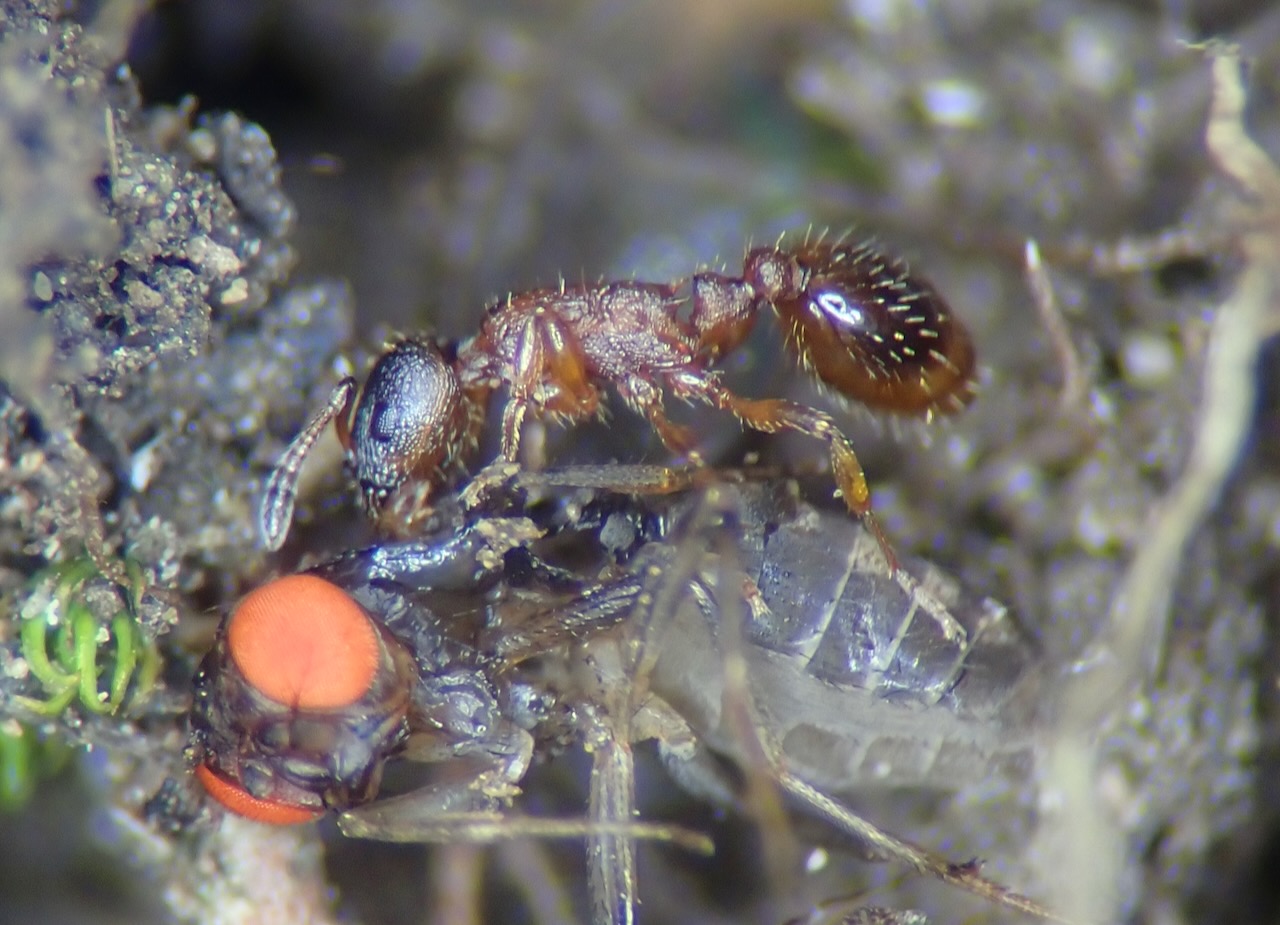
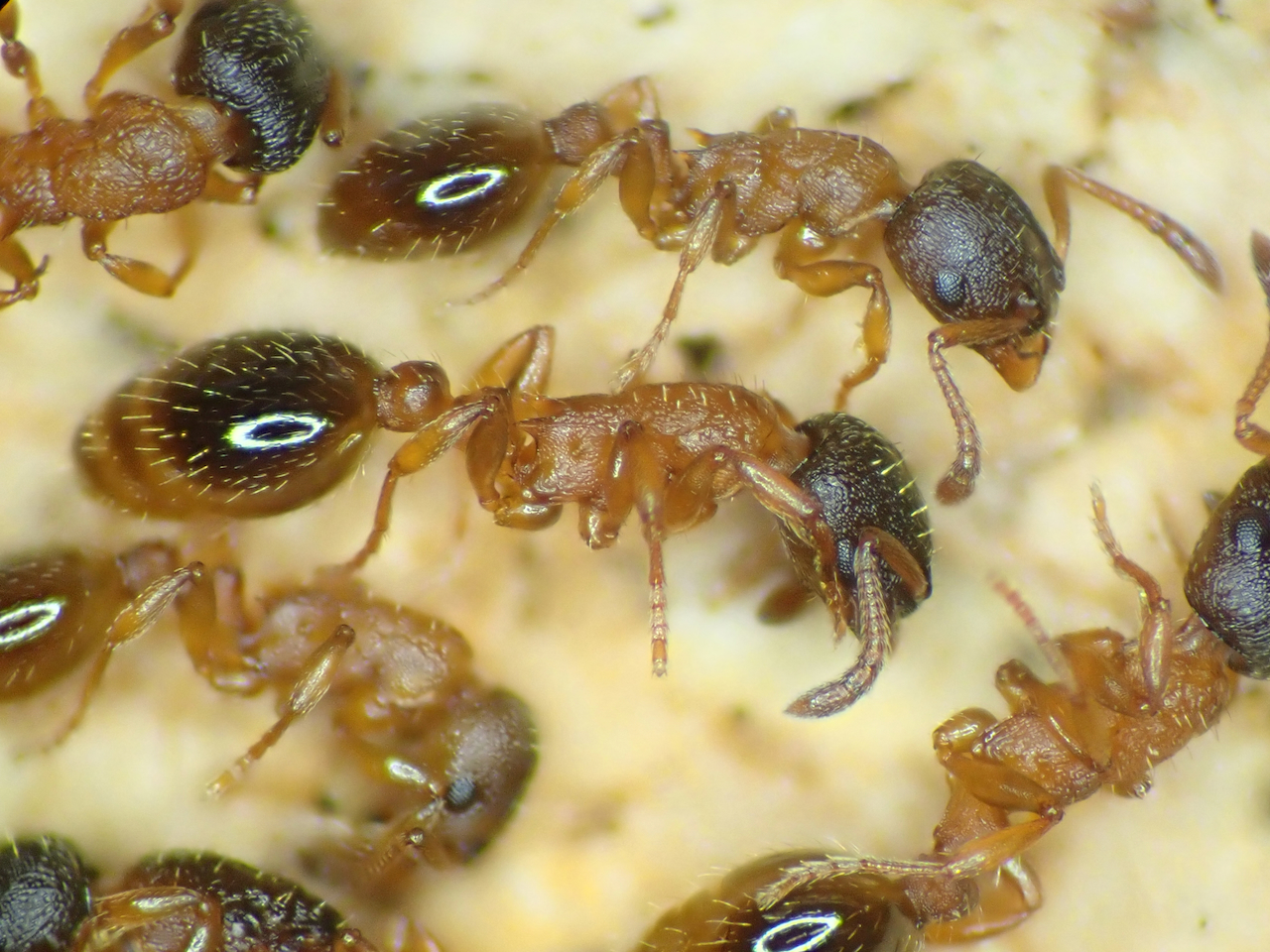
First recorded in the British Isles in August 2026 with several colonies found in the cliffs of an isolated bay on the Wigtownshire coast. On the continent, it is a widespread species: accounts of Leptothorax muscorum state its range as being “all of Europe except the British Isles” (Collingwood, 1980; Seifert, 2019), a seemingly anomalous situation that long ago led Cedric Collingwood to predict it should be searched for in Britain, and particularly Scotland (Collingwood, 1964). The relatively remote location of the UK record suggests it is not a recent introduction, and so it remains to be seen whether it has been overlooked as a widespread species in the British Isles, or whether its range is restricted to areas not visited by past myrmecologists. All Leptothorax acervorum specimens in collections should be checked for this species.
Not enough information.
Leptothorax muscorum closely resembles the widespread L. acervorum (q.v.) in having 11 antennal segments, but is slightly smaller, slenderer, and paler with yellowish-brown midbody contrasting with darker gaster and head. The colour differences are variable, but with a lens L. muscorum and L. acervorum are readily distinguishable by the absence or presence respectively of stiff erect hairs on their tibiae. It could be mistaken for a Temnothorax species, but these have 12 antennal segments.
On the continent, found widely in a similar range of habitats to L. acervorum, except it is absent from bogs. In Scandinavia, this species is found particularly in sheltered woodland valleys. The Scottish colonies were nesting in the soil of sheltered south-facing coastal cliffs a few metres above sea level.
In Scandinavia, males and alate queens are found in nests in July and August.
On the continent, nesting in stony banks, dead stumps and under bark (like L. acervorum). In Scotland, colonies were located in dry peaty soil in rock crevices.
Similar to L. acervorum. Foraging workers can be observed running individually over soil and rock surfaces. Likely scavenges dead arthropods. Recruitment to food sources can occur by tandem running: once a food item is discovered, the worker returns to the nest and may recruit another worker, which follows it back to the food.
No information for the UK.
2026